Full Site Automation
by Admin
Posted on 18-11-2025 06:55 PM
What Is Full Site Automation?
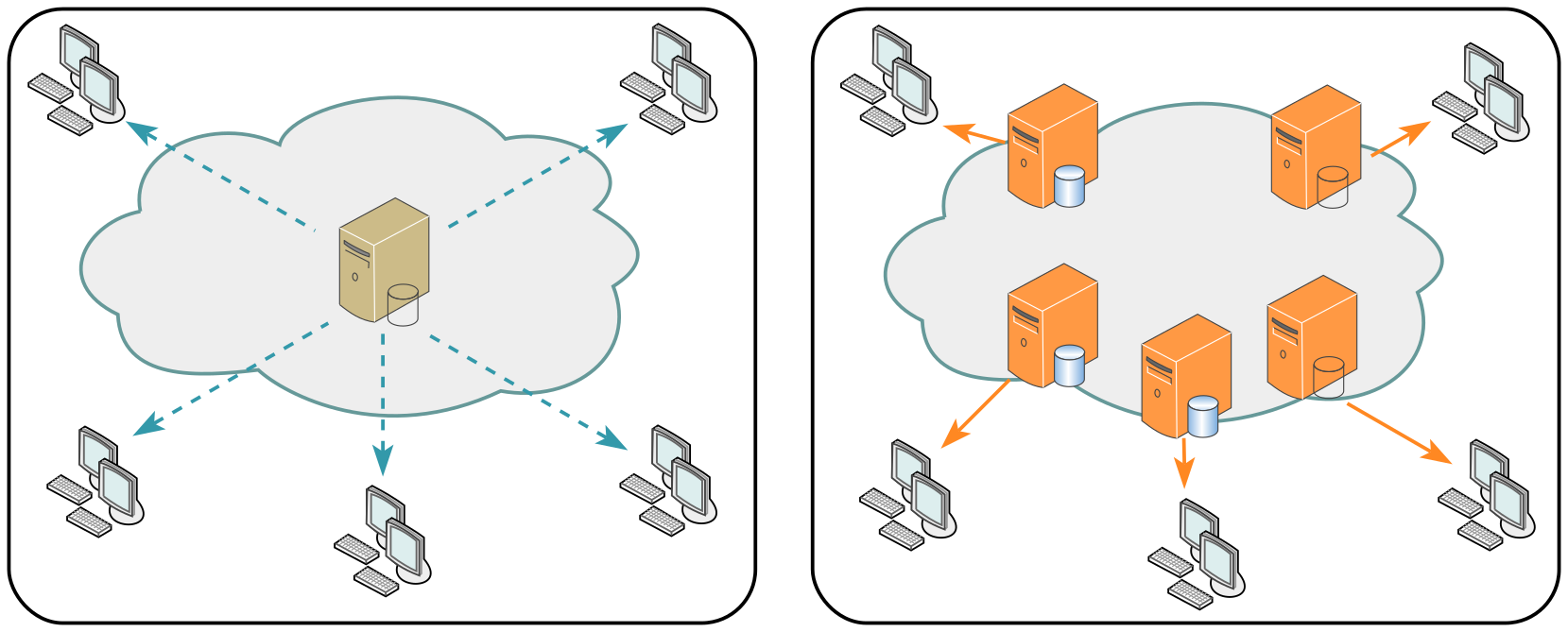
Full Site Automation refers to the end-to-end automation of website functions, including content management, design updates, performance monitoring, security protocols, user interaction, analytics, and even marketing efforts. Unlike traditional automation that might target individual tasks like auto-scheduling social media posts full site automation integrates interconnected systems to manage the entire digital ecosystem autonomously.
Benefits of Full Site Automation
There are numerous benefits to implementing full site automation. Firstly, it can lead to significant cost savings by reducing the need for manual labor. When routine tasks are automated, staff can focus on more strategic initiatives that require human creativity and critical thinking.
Additionally, automation can lead to improved consistency and accuracy in website operations. This means customers receive a reliable experience each time they visit. Some key benefits include:
- Increased Efficiency: Tasks are completed faster.
- Enhanced User Experience: Customers receive quicker responses.
- Cost Savings: Less manual work means lower operational costs.
Key Components of Full Site Automation
To implement full site automation effectively, several key components must be considered. These include content management systems (CMS), customer relationship management (CRM) tools, and analytics platforms. Each plays a crucial role in ensuring the site runs smoothly.
For example, a CMS allows for automated updates and publishing of content, while a CRM can manage customer interactions without manual input. Integrating these systems is vital for a seamless automated experience. Here are some essential components:
- Content Management System (CMS)
- Customer Relationship Management (CRM)
- Automated Marketing Tools
How to Get Started with Automation
Starting with full site automation can feel overwhelming, but it doesn't have to be! Begin by identifying processes that are repetitive and time-consuming. This might include things like email marketing, inventory management, or customer inquiries.
From there, you can choose the right tools that suit your needs. Look for platforms that integrate well with your existing systems. Start small, and gradually expand your automated processes. Remember, the goal is to make operations smoother. Here are some steps to consider:
- Identify tasks to automate.
- Choose the right tools.
- Start small and scale up.
Challenges of Full Site Automation
While full site automation has many benefits, there are also challenges. One common challenge is ensuring all automated systems work together. If different tools don’t integrate well, it can lead to confusion and errors.
Another challenge is the potential loss of the personal touch in customer service. Automating responses can sometimes feel impersonal. It's essential to find a balance between automation and personal interaction. Be aware of these challenges:
- Integration Issues
- Loss of Personal Touch
- Initial Setup Costs
Best Practices for Full Site Automation
To make full site automation successful, follow best practices that ensure smooth operation. First, regularly review automated processes to ensure they are functioning correctly. This helps in identifying any issues early on.
Also, keep the lines of communication open with your users. Gather feedback on their experiences with automated systems to refine your approach. Here are some best practices to keep in mind:
- Regularly review automated tasks.
- Seek user feedback on automation.
- Continuously improve your systems.
Future of Full Site Automation
The future of full site automation looks promising! With advancements in artificial intelligence and machine learning, automation will become even more sophisticated. These technologies can help predict user behavior and tailor experiences accordingly.
As a result, we can expect more personalized interactions and efficient operations. By embracing these technologies, businesses can stay ahead of the curve and provide exceptional service. The future trends to watch include:
- AI-Powered Automation
- Enhanced Personalization
- Integration of IoT Devices
FAQs about Full Site Automation
- What is Full Site Automation? Full site automation refers to the process of using technology to manage and streamline all operations of a website, enhancing efficiency and user experience without constant human intervention.
- What are the benefits of implementing Full Site Automation? Benefits include increased efficiency, enhanced user experience, and cost savings by reducing manual work.
- What key components are needed for Full Site Automation? Key components include Content Management Systems (CMS), Customer Relationship Management (CRM) tools, and automated marketing tools.
- How can one get started with Full Site Automation? Start by identifying repetitive tasks, choosing the right tools, and beginning with small automation processes before scaling up.
- What challenges can arise with Full Site Automation? Challenges include integration issues between different tools, potential loss of personal touch in customer service, and initial setup costs.
- What are some best practices for Full Site Automation? Best practices include regularly reviewing automated tasks, seeking user feedback, and continuously improving systems.
- What does the future hold for Full Site Automation? The future looks promising with advancements in AI and machine learning, leading to more personalized interactions and efficient operations.